seon

THERM

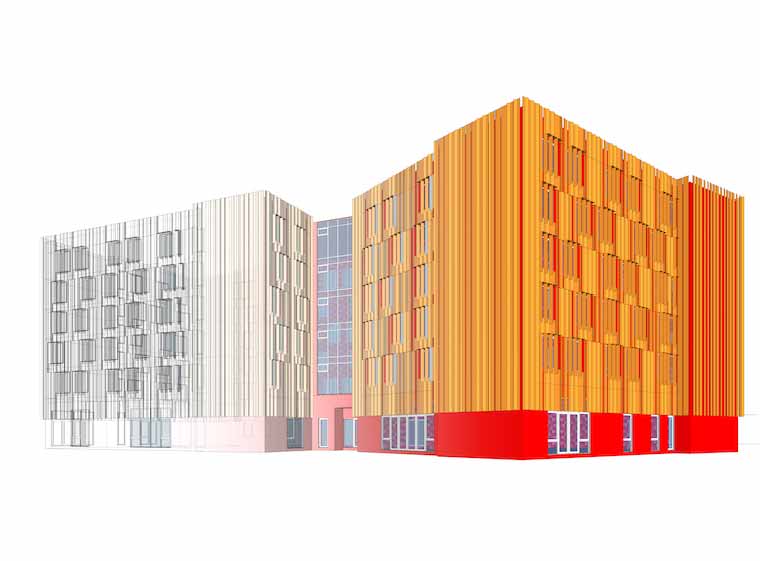
THERM is a state-of-the-art computer program developed at Lawrence Berkeley National Laboratory (LBNL) for use by building component manufacturers, engineers, educators, students, architects, and others interested in heat transfer. Using THERM, you can model two-dimensional heat-transfer effects in building components such as windows, walls, foundations, roofs, and doors; appliances; and other products where thermal bridges are of concern. THERM’s heat-transfer analysis allows you to evaluate a product’s energy efficiency and local temperature patterns, which may relate directly to problems with condensation, moisture damage, and structural integrity.
THERM Read More »

The Building Technology and Urban Systems (BTUS) Division at Lawrence Berkeley National Laboratory (Berkeley Lab) has created the Rosenfeld Building Science Fellowship to draw outstanding scientists and engineers who have the potential and the desire to contribute to the betterment of society through fundamental scientific and technological advances in the field of building technology research.

Rosenfeld Building Science Fellowship

The Building Technology and Urban Systems (BTUS) Division at Lawrence Berkeley National Laboratory (Berkeley Lab) has created the Rosenfeld Building Science Fellowship to draw outstanding scientists and engineers who have the potential and the desire to contribute to the betterment of society through fundamental scientific and technological advances in the field of building technology research. Rosenfeld Building Science Fellowship participants will carry out innovative research in the area of building technology, publish impactful papers in peer-reviewed journals, present seminars at ETA and attend major conferences. Additional expectations include a final report at program conclusion to include: a brief summary of the research conducted and copies of publications resulting from the research.

Rosenfeld Building Science Fellowship Read More »

How Sec. E.134.1 Can Influence the Housing Market: Reviewing Public Pension Funds’ Carbon Footprint

mpact of Sec. E.134.1 on the Housing Market: Reviewing Public Pension Funds’ Carbon Footprint In the realm of Vermont’s housing market, Section E.134.1’s requirement for a carbon footprint review of public pension funds holds both direct and indirect implications. Let’s delve into how this provision can influence the housing market, considering both the positive and

How Sec. E.134.1 Can Influence the Housing Market: Reviewing Public Pension Funds’ Carbon Footprint Read More »

Analyzing Fiscal Year 2024 Fee Report and Its Implications for Residential Homes, Homeowners, and Homelessness

Analyzing Fiscal Year 2024 Fee Report and Its Implications for Residential Homes, Homeowners, and Homelessness In the intricate web of legislative provisions, even seemingly unrelated sections can carry implications for residential homes, homeowners, and homelessness. Section E.127 of the legislative framework delves into fiscal year 2024 fee reports, presenting an avenue to explore how this

Analyzing Fiscal Year 2024 Fee Report and Its Implications for Residential Homes, Homeowners, and Homelessness Read More »

Introducing Vermont’s Housing Transition Program: A Key Component of the New Bill

Introducing Vermont’s Housing Transition Program: A Key Component of the New Bill Vermont’s unwavering commitment to addressing homelessness and housing instability is taking a significant step forward with the introduction of the Housing Transition Program, a crucial part of the new bill. Supported by the American Rescue Plan Act (ARPA) recovery funds, this initiative underscores

Introducing Vermont’s Housing Transition Program: A Key Component of the New Bill Read More »

Expanding Affordable Housing: Vermont’s Manufactured Home Improvement and Replacement Program

Amid the ongoing efforts to bolster affordable housing options and support homeowners, Vermont has introduced a new initiative known as the Manufactured Home Improvement and Replacement Program. This program, funded by the American Rescue Plan Act (ARPA) recovery funds, aims to address various aspects of manufactured home communities and provide financial assistance to homeowners in

Expanding Affordable Housing: Vermont’s Manufactured Home Improvement and Replacement Program Read More »

Weatherization Incentives in Vermont: Empowering Homes for a Greener Future

Efficiency Vermont is a member of SEON. Here is how they are making a difference. In an effort to promote energy efficiency, cost savings, and a more sustainable future, Vermont has embarked on an ambitious journey by allocating funds to provide weatherization incentives to its residents with moderate incomes. This initiative, facilitated by Efficiency Vermont,

Weatherization Incentives in Vermont: Empowering Homes for a Greener Future Read More »

What homeowners with children need to know about the Vermont Bill that addresses Polychlorinated Biphenyls (PCBs) in schools

This section addresses Polychlorinated Biphenyls (PCBs) testing, remediation, and removal in schools in the state of Vermont. Here’s what homeowners, particularly those with school-age children, need to know about this section: 1. PCB Testing in Schools: The Department of Environmental Conservation, in consultation with the Department of Health and the Agency of Education, will use

What homeowners with children need to know about the Vermont Bill that addresses Polychlorinated Biphenyls (PCBs) in schools Read More »

Investing in Affordable Housing: Fiscal Year 2024 Appropriations

As fiscal year 2024 approaches, policymakers are taking significant steps to address housing challenges and improve housing accessibility in the state of Vermont. This article delves into two important sections of the legislative document, highlighting the allocations for affordable housing development and the miscellaneous fiscal year 2024 one-time appropriations. Sec. B.1102 AFFORDABLE HOUSING DEVELOPMENT –

Investing in Affordable Housing: Fiscal Year 2024 Appropriations Read More »